NEWSROOM

News, insights and updates.

Company developments, technology explainers, event updates and engineering perspectives from GK Semiconductor.

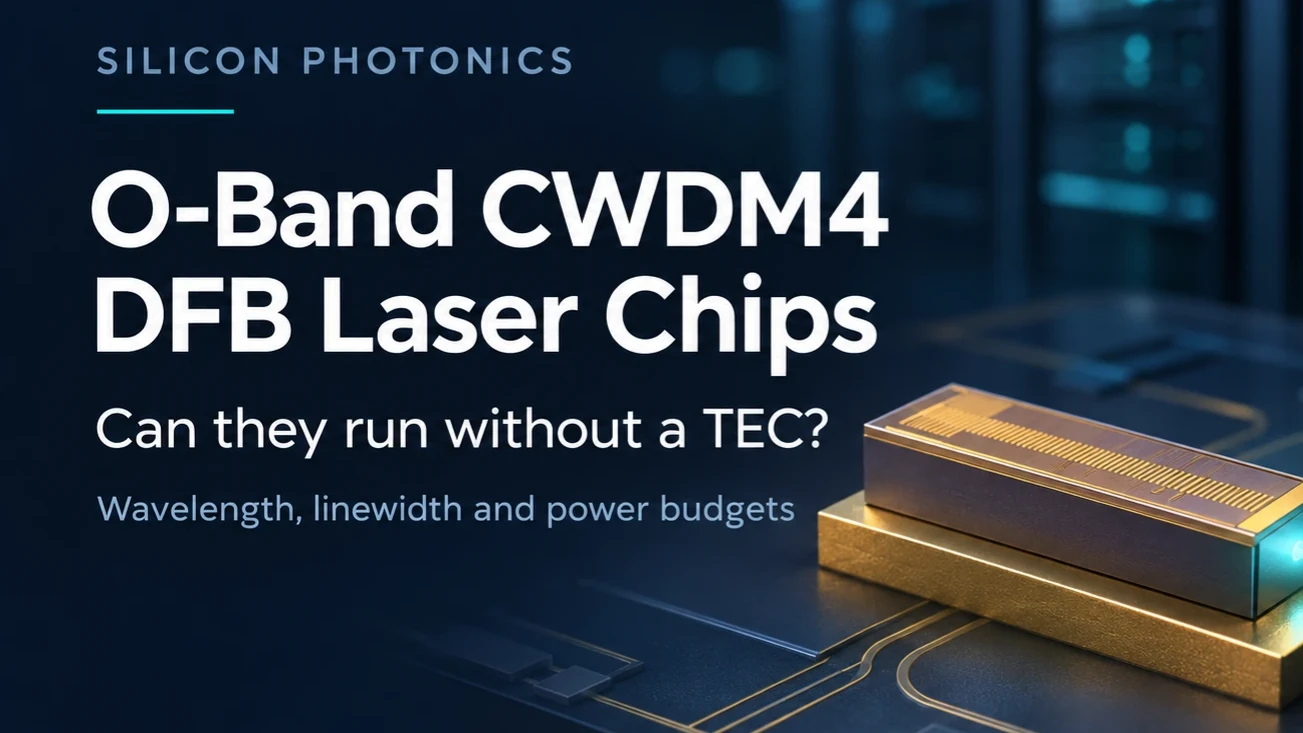
O-Band CWDM4 DFB Laser Chips: Can They Run Without a TEC?

GK Semiconductor's 70/100 mW O-band CWDM4 CW DFB chip (GKCP-1XXX-100M-CW-00, 1271–1331 nm) targets 800G/1.6T optics and external silicon photonics sources. With a ±6.5 nm 25 °C bin, uncooled operation fails over −5 to +85 °C, but works over 25 to 75 °C if binned within 8.5 nm. Section 6 gives the derivation, and the three budgets below outline the math and decision criteria.

Read the story
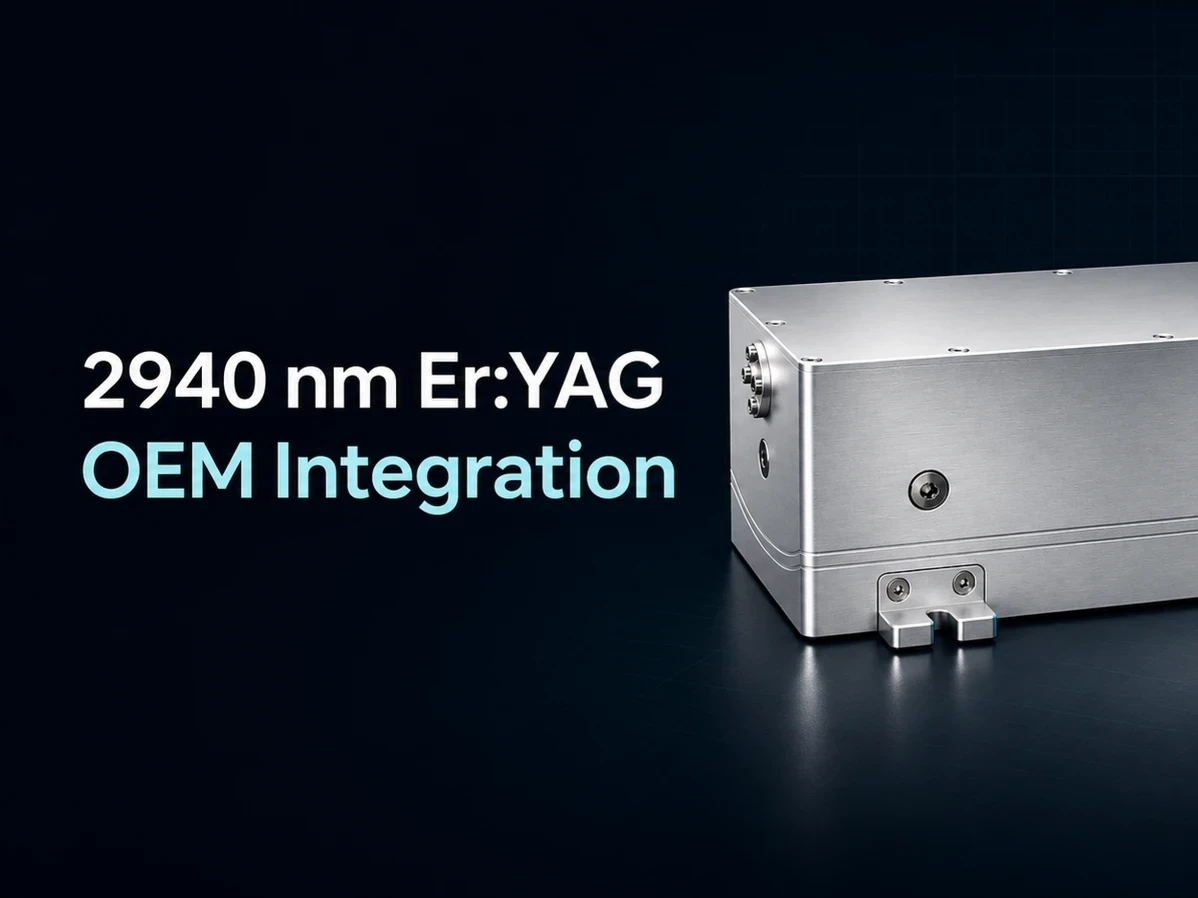
2940 nm Er:YAG for OEM Systems: Pulse Energy, Delivery, Thermal Budget, and Safety
Technology Explained

2940 nm Er:YAG for OEM Systems: Pulse Energy, Delivery, Thermal Budget, and Safety

The 2940-200mJ is a modular, lamp-pumped Er:YAG source delivering 200 mJ pulses at up to 10 W average power with an external chiller and delivery optics. System integration is governed by key physical constraints, including a ~1 µm tissue penetration depth, a 50 Hz repetition rate ceiling at full energy, and the requirement for non-silica beam delivery. Furthermore, its high-power emission mandates early mechanical integration of Class 4 safety housing and interlocks.

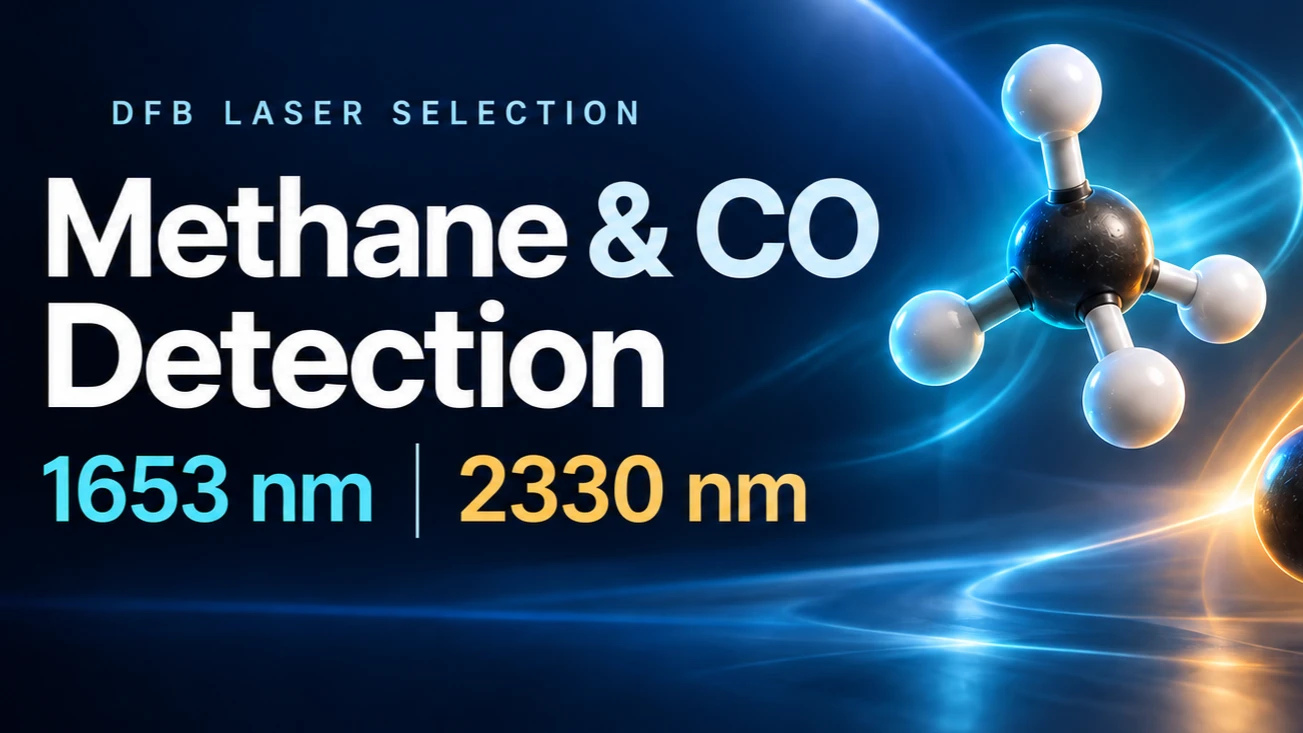
1653 nm or 2330 nm: Which DFB Laser for Methane and CO?
Technology Explained

1653 nm or 2330 nm: Which DFB Laser for Methane and CO?

Where methane's three absorption windows lie | whether 2.3 μm can be used for methane | how much tuning headroom separates the two devices | why 2.33 μm forces a different material system | how sources are configured for simultaneous methane and CO measurement.

BROWSE BY CATEGORY

Latest from GK Semiconductor.

Explore company developments, technology insights and events from GK Semiconductor.

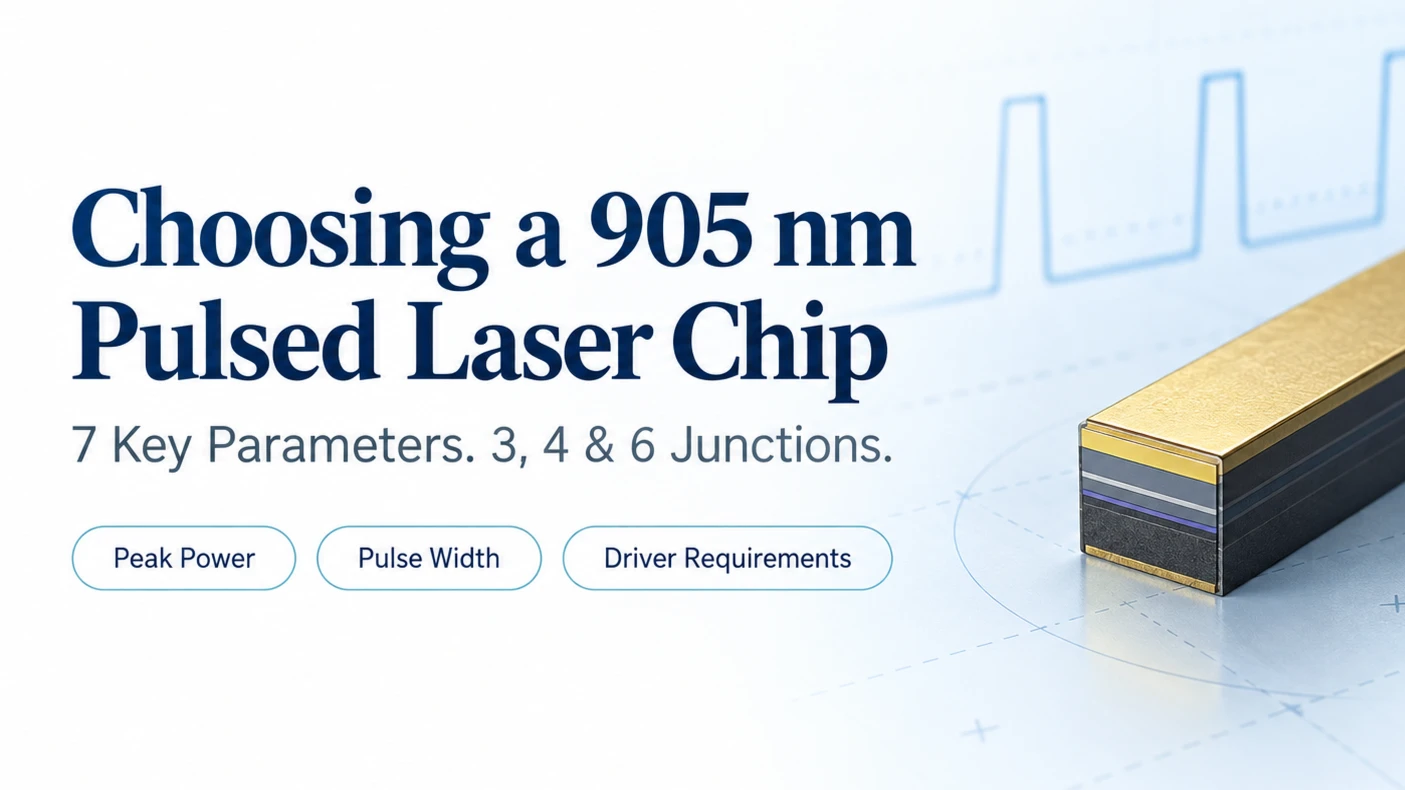
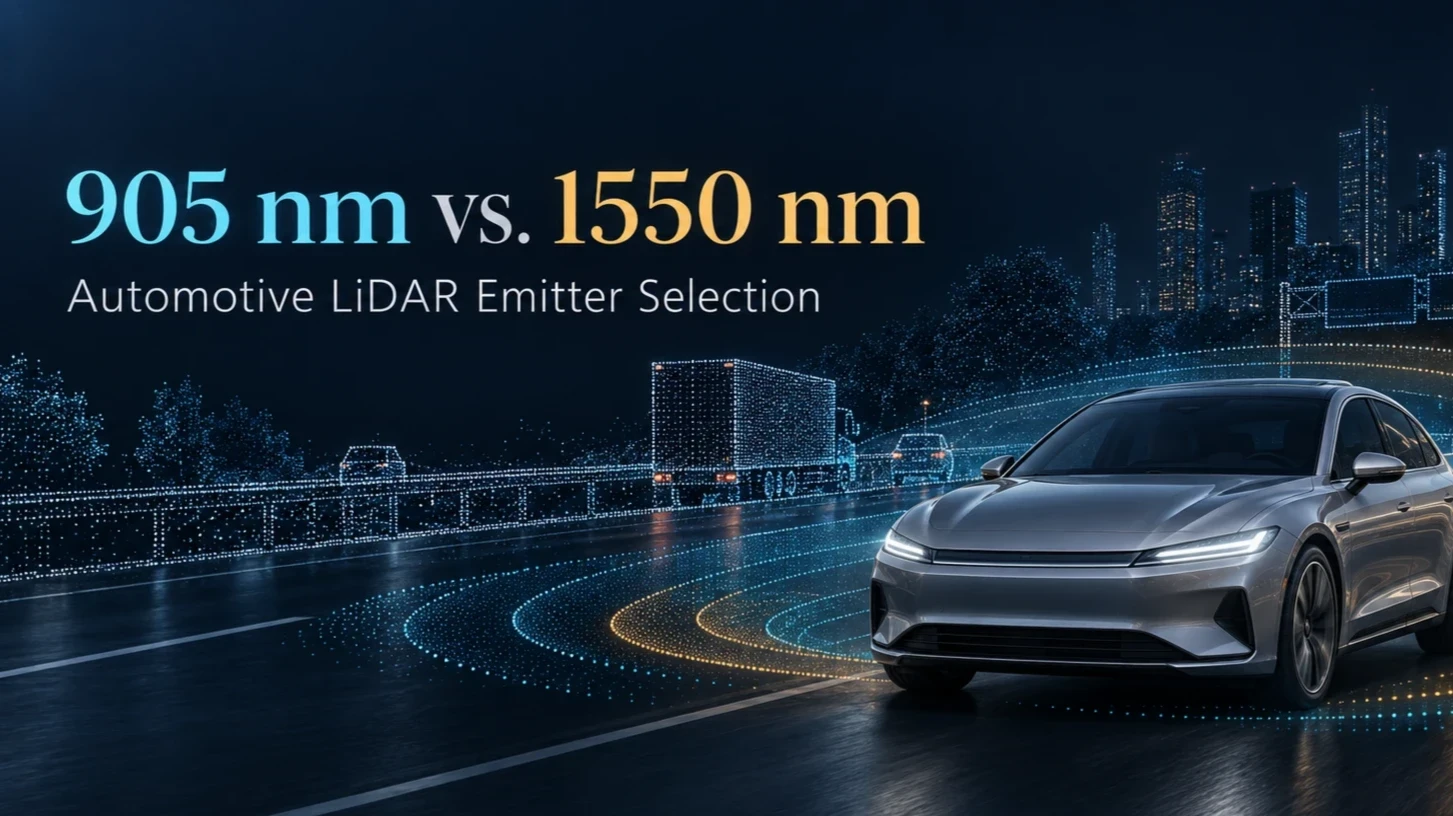
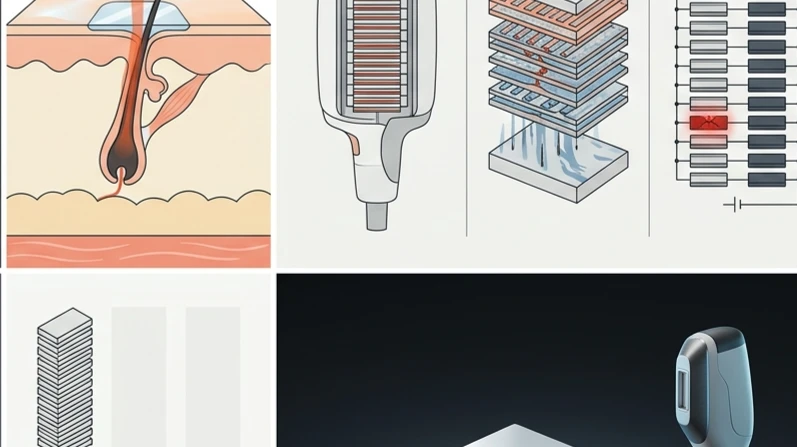
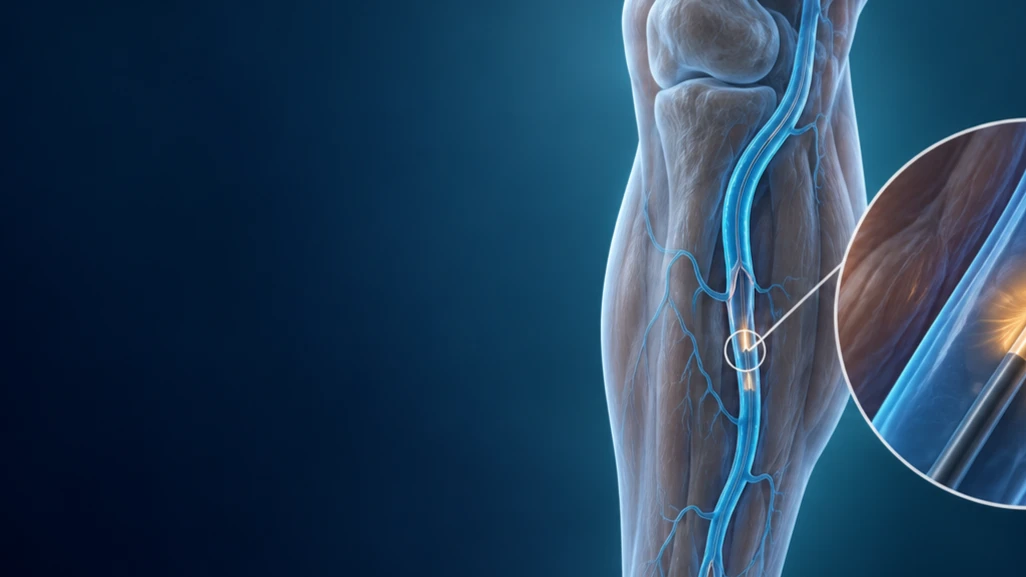
How to Choose a 905 nm Pulsed Laser Chip: Seven Key Parameters and the Multi-Junction Power Ladder Choosing a 905 nm emitter chip comes down to matching seven core parameters to your system's optics and electronics, then selecting a triple-, quad-, or six-junction power tier that balances target range against driver complexity. Read article How to Choose an Automotive LiDAR Emitter 905 nm vs. 1550 nm Automotive LiDAR transmitters divide into two camps: 905 nm, which offers a mature supply chain, low chip cost, and direct silicon detector compatibility; and 1550 nm, which allows higher eye-safe optical power at the cost of pricier components and greater architectural complexity. Because each suits different range, budget, and volume needs, defining four key parameters—target detection range, power and thermal budget, unit cost ceiling, and annual production volume—will naturally determine the right wavelength. Read article Choosing an MWIR Light Source: ICL, QCL, and Antimonide Lasers How ICL and QCL differ | why gas sensing uses MWIR sources | what the antimonide platform is | Read article Why Have Aesthetic Laser Hair Removal Systems Surged to 4000W? A Breakdown of the Bottlenecks in Traditional 50W/100W Bar Stacking In aesthetic hair removal, 4000W power pairs large-spot sliding coverage with ≤30ms high-energy pulses to instantly destroy follicles without burning the epidermis. However, stacking 30–40 of 50W/100W laser bars causes ~1 kg handpieces, high microchannel water resistance, and uncontrolled wavelength thermal drift, while unstable 200W bars face thermal stress and optical damage (COMD)—urgently demanding a breakthrough in underlying high-power chips. Read article What Are Mid- and Far-Infrared Technologies and Ⅲ-V Optoelectronic Chips? Explore Ⅲ-V compound semiconductors and mid-to-far infrared optoelectronic chips, covering key breakthroughs in laser pumping, sensing, imaging, and full-chain IDM manufacturing. Read article How Effective Is 1940 nm Laser Treatment for Varicose Veins The 1940 nm wavelength is attracting interest in endovenous laser treatment (EVLT) because of its strong absorption by water. This supports localized energy deposition and treatment at relatively low power. Clinical studies have reported high vein closure rates and favorable recovery outcomes, although results depend on the device, fiber, treatment protocol, and patient selection. GK Semiconductor provides proprietary laser chips, fiber-coupled modules, and complete system development support to help medical device manufacturers develop 1940 nm EVLT platforms. Read article